About DD-Organizations
The distributed database of (DD-Organizations) is an ownerless and trustless registry of organizations. It uses the Open Index Protocol specification to record data in the immutable transactions of the FLO blockchain.
DD-Organizations DDX-project vs DD-Organizations
DD-Organizations is ownerless database of organizations. Because it is ownerless, anyone can add a record to the database without asking permission.
DD-Organizations DDX-project is one of the gateways that facilitates the interaction of humans and the DD-Organizations. It can be used to visualize records from DD-Organizations and to add new records to it.
There are is no official gateway to DD-Organizations. Each gateway can choose which record, or type of records it shows. This particular gateway is controled by the DDX-project. That means that even if you use this gateway to add a record on DD-Organizations, it may not be displayed by DD-Organizations DDX-project. That does not mean that your record is not on DD-Organizations.
What is new about DD-Organizations?
DD-Organizations is a truly public database of organizations.
There is no public space on the Internet. Even apparent free services that allow us to host content or add our pictures in social media are stored and processed in private infrastructure. However, the software initially developed as a digital currency relies on adding links to an immutable chain of information. It turned out that anyone can add links to that chain, making it a public space on the Internet.
Blockchain beyond digital currency
While the original Bitcoin was meant to be a digital currency, other blockchains have different purposes. The purpose of the FLO blockchain, called Florincoin initially, is to leverage the public space generated by blockchains to hold data, truly public data. The Open Index Protocol was created to capitalize on this property of the FLO blockchain.
The Open Index Protocol
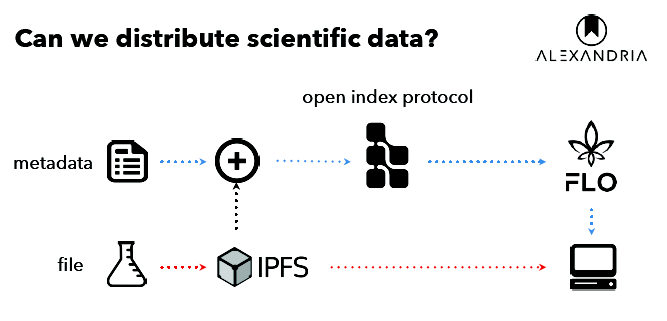
The Open Index Protocol (OIP) is a series of specifications of how to read and write information applied to the blockchain. Around this protocol, we built programs that scan the blockchain and index information in local databases.
We centralized the index of DD-Organizations in the distributed FLO blockchain and federated the ability to facilitate the consumption of data.
You own your record and your data.
When you submit a record to DD-Organizations you must execute a blockchain transaction, we add the "Add Records" page to help. To execute a transaction, you need to sign the trasnaction with a valid cryptographic key that holds a FLO balance. You need that balance to pay miners to process your transaction and add to the blockchain for you.
Yes, anyone can be a miner. No, you can not pick which miner will process your transaction.
By signing the transaction with your cryptographic key, the Open Index Protocol specification dictates that you own that transaction and consequently the record, you are the sole responsible individual for its content.
Gateways are autonomous and independent.
FAQ
Why my new record is not showing?
Because you need to get it approved first.
How do I get FLO?
You can buy FLO from Bittrex or from someone.
What is a mnemonics ?
Funny you asked. Mnemonics is...
What are the terms and conditions?
This is all public data.